✅ Pros
- Expandable with an exhaust system
- Standard seat height
- Good entry-level price
❌ Cons
- High surcharge for the pre-assembled version
- Assembling the kit is very demanding
- Thin, lower-quality wood
- Wood still needs to be sealed yourself
- Exhaust system without exhaust ducting
- Cumbersome container removal
- Urine container without odor seal
The Verdict
Comfortable and ready to use, if not the most premium
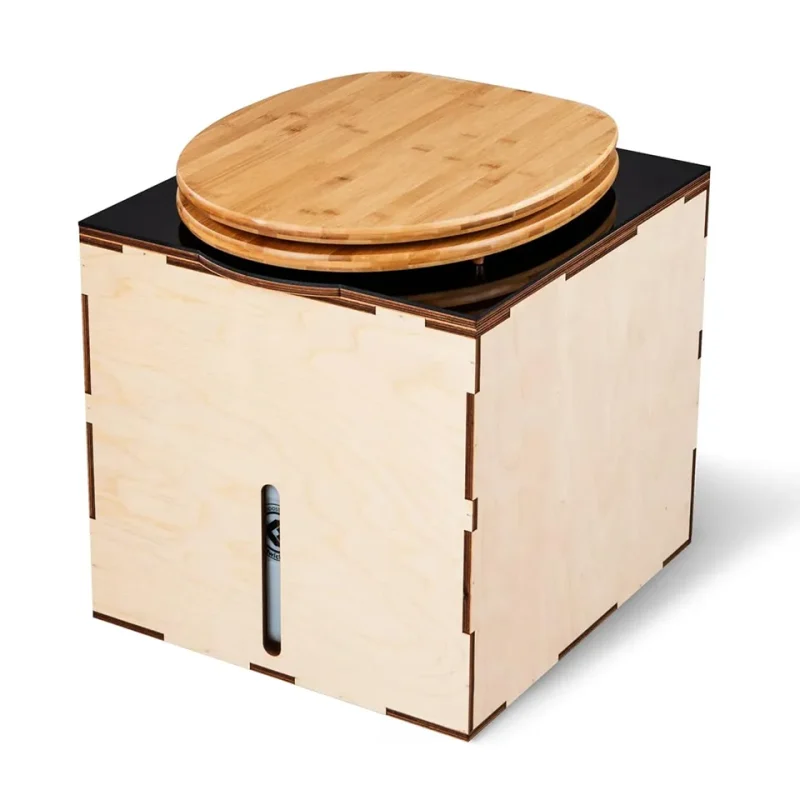
The Kildwick EasyLoo is one of the largest composting toilets in the manufacturer's range and is particularly suitable for stationary use, such as in garden houses, tiny houses, or on campsites.
The Kildwick EasyLoo is one of the largest composting toilets in the manufacturer's range and is particularly suitable for stationary use, such as in garden houses, tiny houses, or on campsites. With a depth of 45 cm (17.7 in), a width of 43 cm (16.9 in), and a height of 48 cm (18.9 in), the toilet is comparatively large. It weighs around 11.5 kg (25.4 lb), which speaks against mobile use. The EasyLoo is available either as a kit for 269.90 € or fully assembled for 419.90 €. For our test, we chose the kit with the fan and additional Spillguard kit, so we could also evaluate the assembly for you.
In addition to the toilet kit, the package includes a 16-liter (4.2 gal) solids container and a 9.5-liter (2.5 gal) urine container, both white, with a lid. According to Kildwick, these offer enough capacity for 23 small and 17 large uses before the containers need to be emptied. Unfortunately, no inlays were included and, to save on shipping costs, should be ordered together in one go if you want to use the original Kildwick bags.
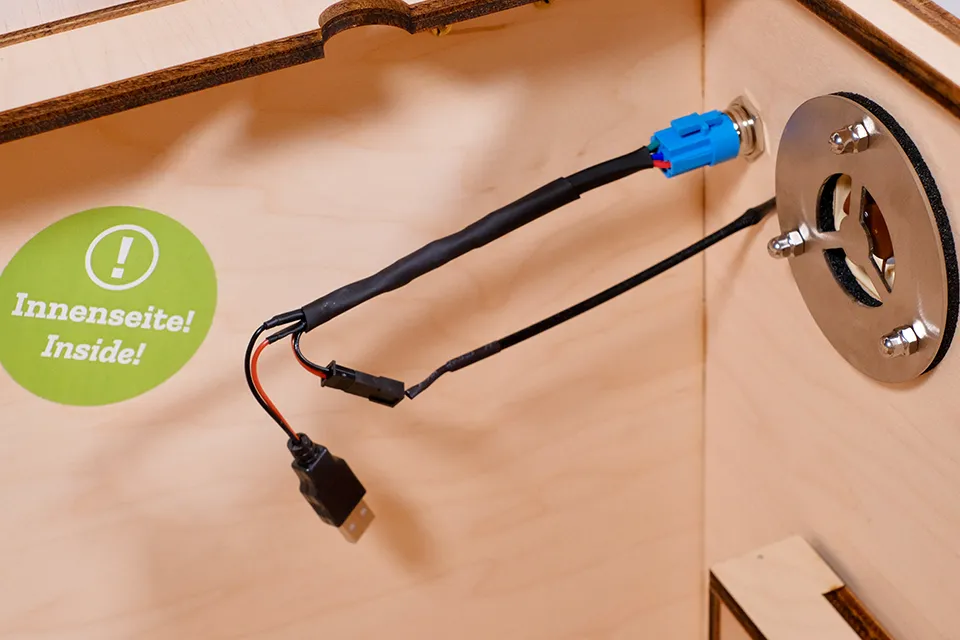
The product is delivered with a urine diverter made from ABS plastic and a toilet seat made from bamboo wood, and the maximum tested load capacity is 120 kg (264.6 lb). The toilet can optionally be retrofitted with an exhaust system, offered in two variants, 5V via USB or 12V via the vehicle's electrical system. We opted for the 5V variant, since we wanted to use the toilet stationary, and have to say that with its forged metal and high-quality switch, it's a real highlight of the toilet.
Assembly
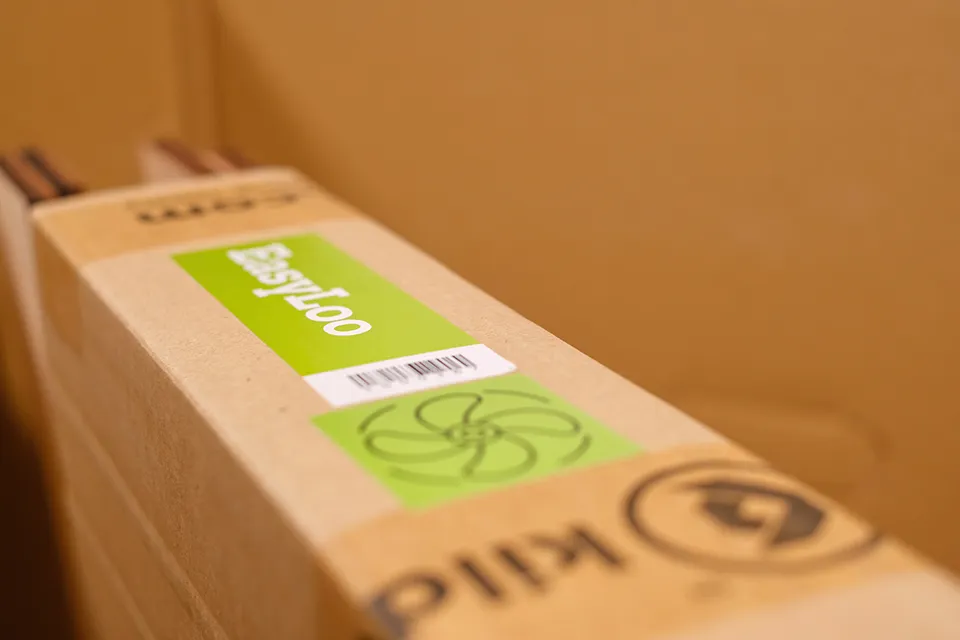
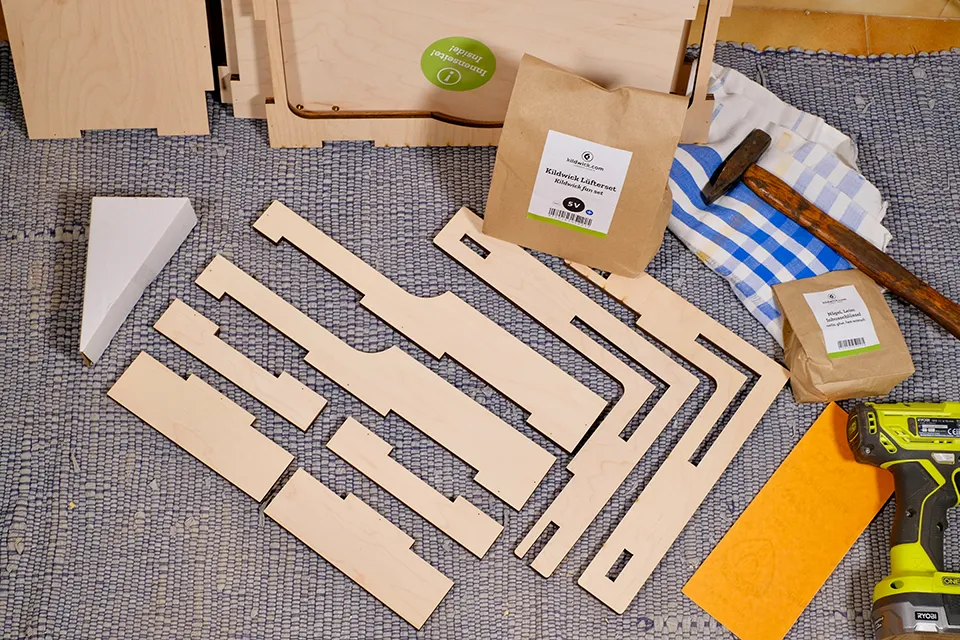
Assembling the Kildwick EasyLoo turns out to be more demanding than initially expected. Although the product page speaks of "simple assembly" and some users describe the assembly as "easy" and "self-explanatory," we found it quite complicated. Above all, we have to point out that the instructions were not included, and the document you have to download online doesn't offer continuous illustrations. Without the digital manual, identifying the correct parts is practically impossible, so you should definitely not just start building on your own.
What particularly surprised us is that the toilet has to be glued, which isn't standard for a kit in this price range and tends to be off-putting for less experienced DIYers like us. The nailing and hammering require a lot of precision. Mistakes are very hard to correct afterward.
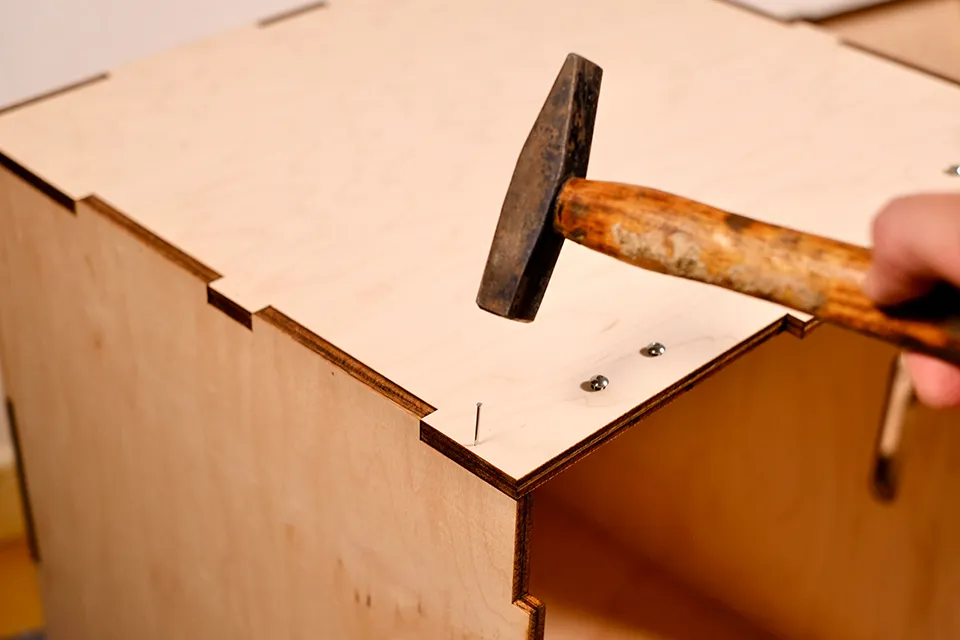
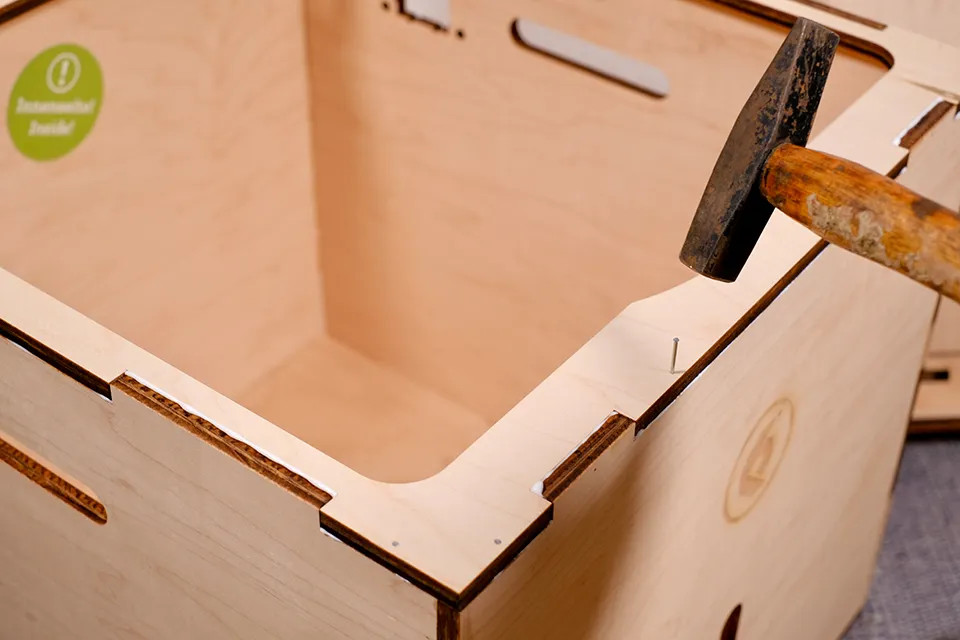
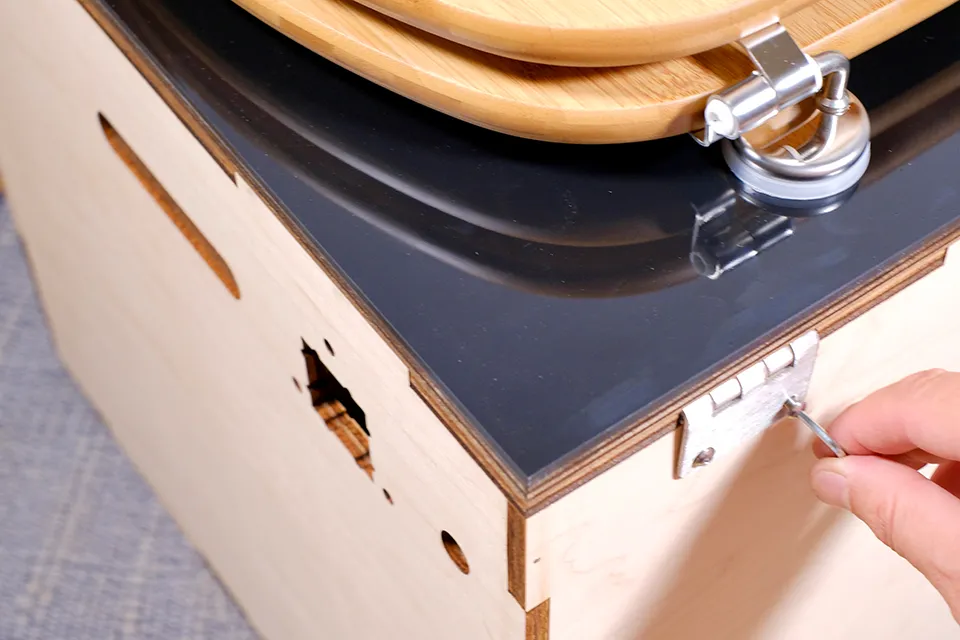
In addition, we encountered a serious problem when mounting the hinge bracket: the bolts at a 90-degree angle can't be reliably fixed, even with the included tool, there's noticeable play. The entire assembly can be shifted despite the thread being tightened firmly, which we consider absolutely unacceptable for later use.
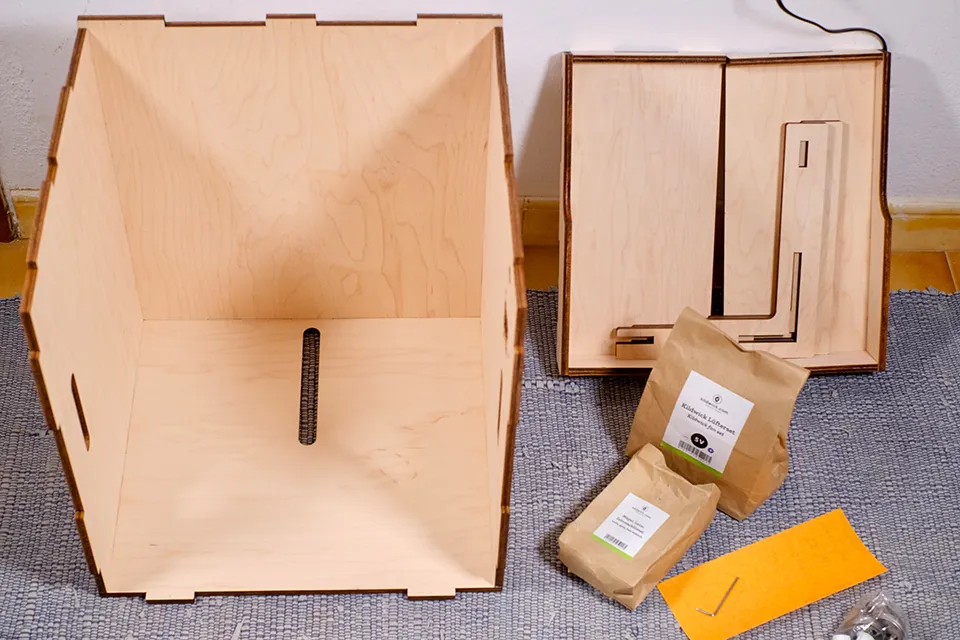
After a full 45 minutes, 15 of which we spent waiting for the glue to dry, our toilet finally stood assembled and we could begin our first practical tests. But first, a few facts about the material, which we identified as one of the EasyLoo's biggest weak points.
Material and workmanship
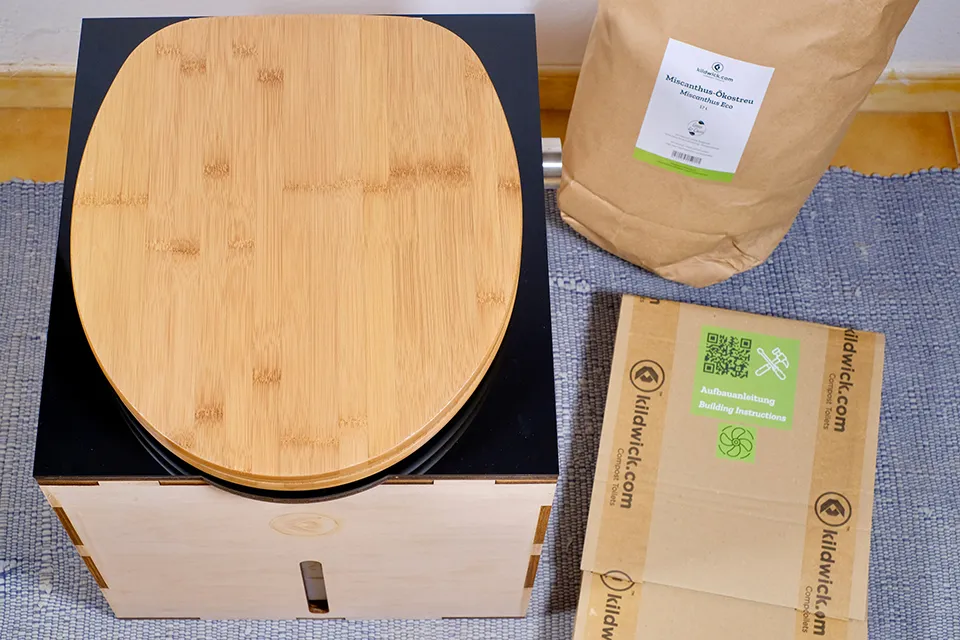
For the EasyLoo, Kildwick uses poplar-eucalyptus wood with a maple-decor middle layer, combined with a bamboo toilet seat. All of these materials belong to the lower quality tier, and frankly, you can tell. The thin wall thickness of 9 mm (0.4 in) matches that of the smaller MiniLoo model and feels rather fragile relative to the size of the toilet. There's also a small point deduction on the sustainability front: eucalyptus wood often comes from monocultures with long transport routes, a contradiction to the ecological idea behind composting toilets.
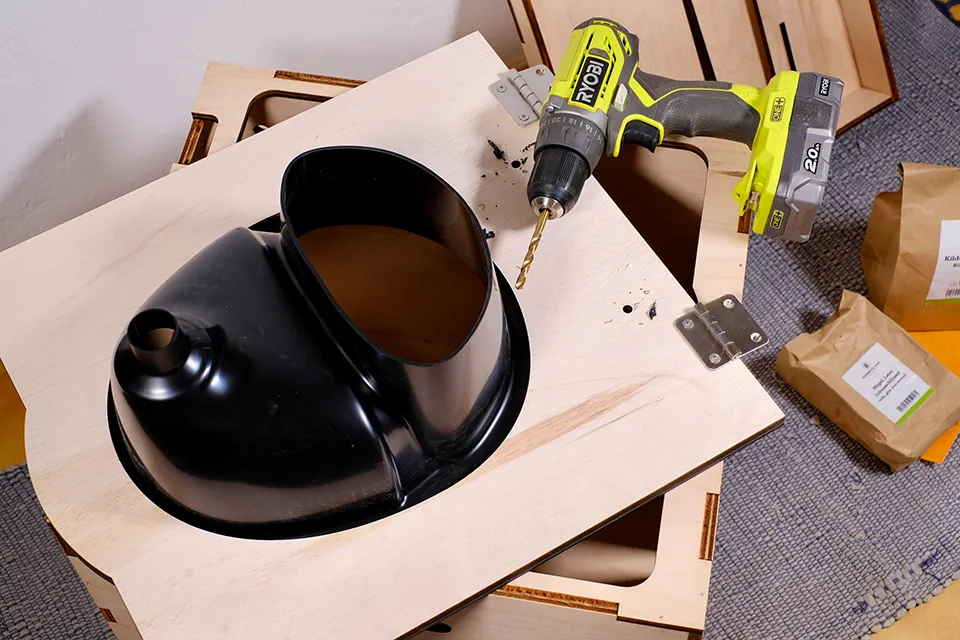
The urine diverter is made from a plastic with a very smooth surface and has a glossy, piano-lacquer look. As a result, it's fairly prone to fingerprints, and in our opinion a matte finish would have offered greater functional and visual value here.
Comfort
Worth highlighting positively is the seat height of the EasyLoo, which is comparable to that of a conventional toilet, giving a familiar seating feel. The seating comfort itself can be described as fair to good. The bamboo seat is somewhat hard, but gives ergonomic support to the user and feels sturdy overall.
Access to the two containers, on the other hand, is problematic: to remove or clean them, the urine diverter has to be pried out with a wooden spatula each time, a cumbersome and less-than-comfortable solution. Also not ideal: both containers are white, and the urine container is transparent as well, which can be perceived as bothersome during use if, unlike us doing so privately, you want to empty the toilet in public places.
Odor development
Basically, composting toilets like the EasyLoo are inherently low-odor, provided they're used correctly. The separation of liquid and solid waste is technically solved flawlessly. In addition, the manufacturer recommends its own bedding material in the form of pressed humus bricks, which need to be manually crumbled before use. A 650 g (1.4 lb) package costs 5.99 €. Alternatively, Kildwick offers miscanthus bedding, priced at 14.90 € for 17 liters (4.5 gal). We put both alternatives through a thorough test and clearly lean toward the humus bricks. They're quite dusty to handle if not soaked in water first, but they bind solids far better than the reed-like miscanthus bedding, which, to put it mildly, disappointed us quite a bit.
Anyone wanting to do even more against odors can purchase the separately available exhaust system. This is available both in 5V (USB) and 12V (vehicle power) and operates pleasantly quietly at 17.9 dB. However, the surcharge of around 100 € is relatively high, especially since the set doesn't include an exhaust duct, which has to be organized separately. Anyone who decides to retrofit an exhaust system only after the fact pays a hefty 119.90 €. What surprised us in particular is that the fan has no exhaust ducting whatsoever and thus has to sit directly against a hole in a wall, meaning odors can't be fully vented outside and instead spread in the room.
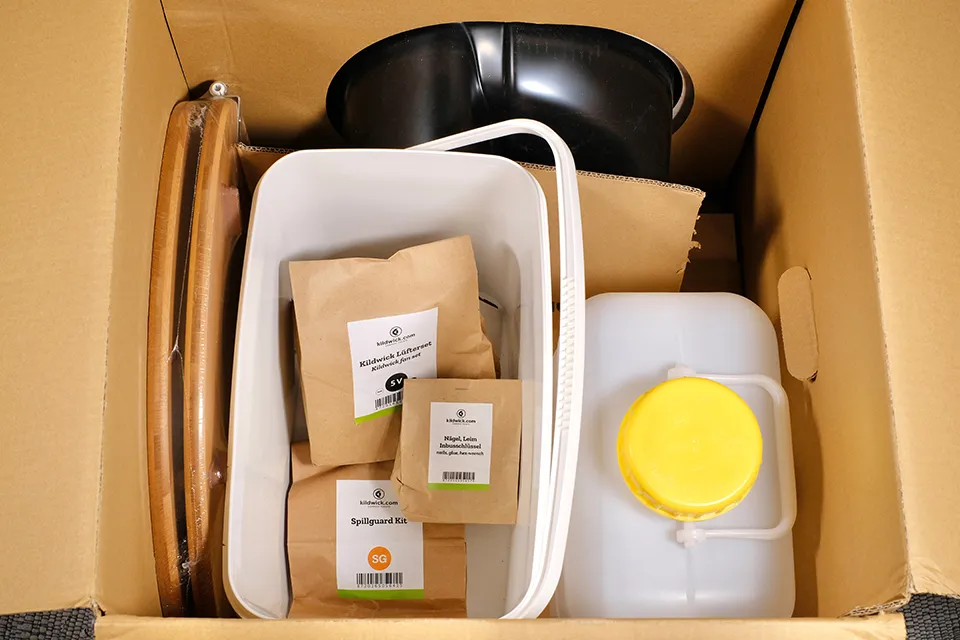
Another weak point shows up with the urine container. It has no integrated odor seal. Kildwick does offer the Spillguard set, which actually serves as overflow protection but, combined with an inserted plug, also reduces odors. However, this only works if the plug is actually in the toilet. When the toilet is used, this plug has to be removed manually every time. This means the user has to touch, with their hand, a part that has been in direct contact with urine, and find somewhere suitable to put it down, a fairly unhygienic solution that clearly contradicts the otherwise well-thought-out concept.
Value for money
The price for the kit is comparatively attractive. For under 270 €, you get a fully functional composting toilet with large containers and optional ventilation. That's even cheaper than the significantly smaller Kildwick MiniLoo and MicroLoo, even though the EasyLoo has a full-fledged toilet seat with lid. However, the value for money is put into perspective when you consider the material quality. The thin plywood panels, the low load capacity, and the difficult assembly take some of the shine off the attractive entry price.
In our opinion, the surcharge of 150 € for a pre-assembled version is too high, and it's a shame that the Spillguard kit isn't included in the standard package. So if you choose the unassembled variant and additionally equip it with an exhaust system and the Spillguard, you end up at a hefty 399.80 €. At that point, the EasyLoo is priced on par with noticeably better-crafted competitor products, without reaching their level of comfort and material quality.
Our conclusion
The Kildwick EasyLoo fulfills its purpose and offers a simple way to use a composting toilet stationarily. Anyone willing to invest some handyman time gets a working system at a reasonable price with the kit. Customer support deserves a positive mention, as it guided us well through the complicated assembly process.
Nevertheless, it should be noted: the choice of material feels subpar, assembly is unnecessarily complicated, and handling, especially of the urine container, is not convincing in terms of hygiene. For occasional use in a garden house or as a stopgap solution in a tiny house, the EasyLoo is acceptable. For permanent use or higher comfort demands, however, you should look for alternatives.