Blog
What to do if your composting toilet smells?
When used correctly, a composting toilet does not smell. We show you what you need to keep in mind to prevent unpleasant odors from developing.
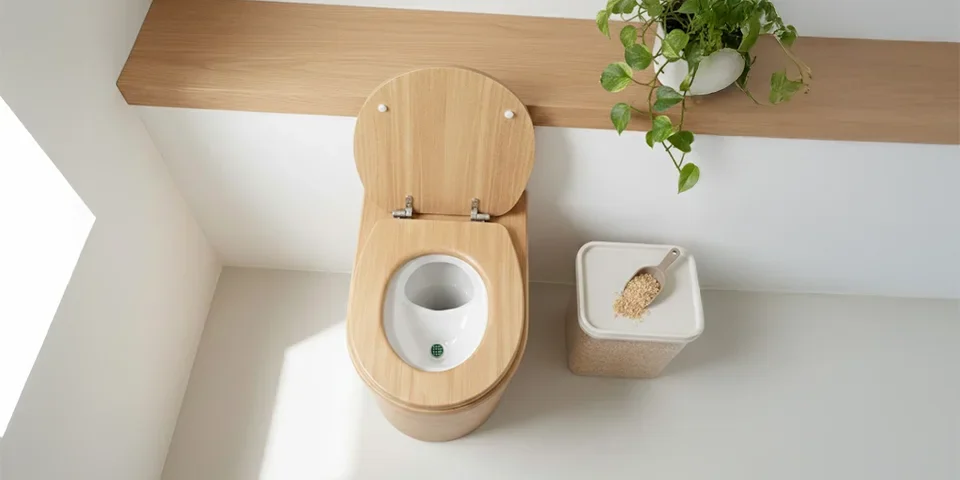
Many people who hear about a composting toilet for the first time immediately ask the same question: does a composting toilet smell or not? The concern is understandable, after all, everyone is familiar with the typical toilet odors from everyday life.
What most people do not realize is that these odors are caused by the mixing of liquid and solid waste. This is exactly where the composting toilet comes in. It works according to a different, much cleaner principle that prevents unpleasant odors from developing in the first place.
A good composting toilet therefore generally does not smell. Why this is the case and what can cause your own composting toilet to smell is explained in the following sections.
How the separation principle prevents a composting toilet from smelling badly
A well-designed composting toilet consistently separates urine from solid waste. This separation is the main reason why hardly any odors develop during everyday use. Urine flows into its own sealed container, while solid waste is collected separately in its own container and covered with dry litter. Using litter removes moisture from the solid waste, allowing the natural decomposition process to take place with very little odor. The litter therefore creates a hygienic environment inside the solids container. Many of the common problems associated with conventional toilets do not arise in the first place.
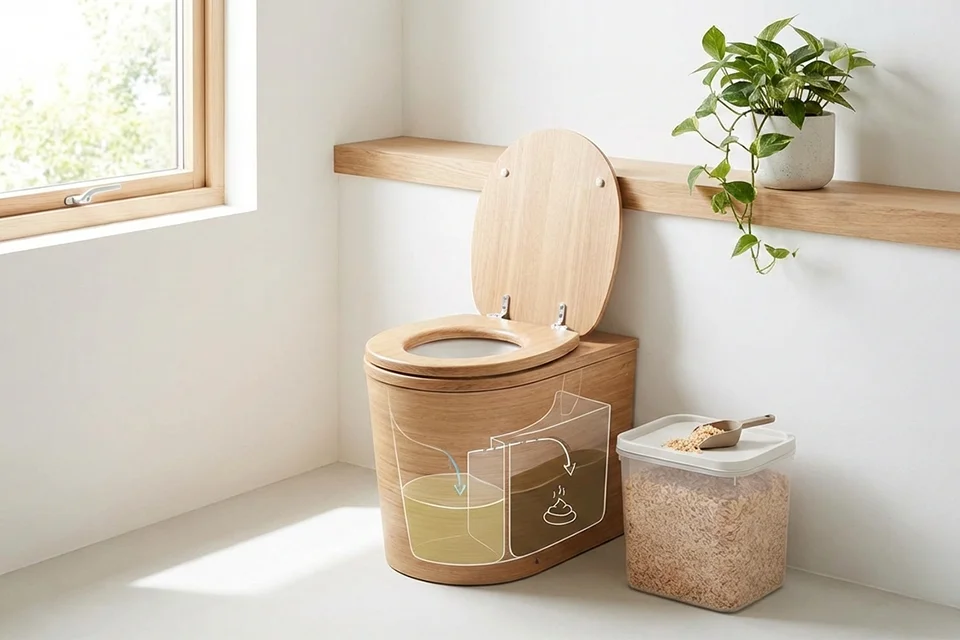
In our composting toilet tests, TROBOLO models perform particularly well when it comes to odor prevention. The manufacturer uses a unique SafeShell system that acts as an odor seal for the urine container while also ensuring that its contents remain securely inside. Unlike many other manufacturers, TROBOLO models prevent the urine container from developing unpleasant odors in the first place.
Therefore, with other manufacturers, the urine container can start to smell much quicker. There can also be several other reasons why a composting toilet smells. In the next section, we look at the most important causes.
What can cause a composting toilet to smell?
If a composting toilet develops unpleasant odors, there can be several reasons:
| Cause | What happens |
|---|---|
| Low-quality separation toilet | With poorly designed models from no-name manufacturers, the separation mechanism often does not work reliably. Urine can then enter the solids container, creating the typical mixture that causes unpleasant odors. |
| No litter or insufficient ventilation | If the solids container is not adequately covered with litter or ventilated with a fan, too much moisture remains. Moist waste tends to smell more quickly and intensely. |
| Overfilled or improperly sealed urine container | If the urine container is full or not completely sealed, ammonia can develop and escape. |
| Incorrect sitting position during use | If urine does not flow cleanly into the opening of the urine-diverting insert, urine and solids can mix, which can contribute to unpleasant odors. |
| Waiting too long to empty the containers | If the solids or urine container is not emptied for an extended period, fermentation processes can develop. These can cause unpleasant odors even with high-quality models. |
It is therefore best to choose a good-quality model from the start that separates liquids and solids reliably and is well manufactured. A high-quality composting toilet prevents many problems before they arise. If the basic construction is right, the risk of unpleasant odors is significantly lower.
Beyond that, correct use is particularly important. The urine container should be emptied regularly, as ammonia can otherwise develop and cause the urine container to start smelling. The solids container should also not be left for too long, as fermentation processes can eventually develop even when using good-quality litter.
It is also important to use enough litter to bind moisture and keep the contents dry. Completely covering the solids after every use reliably prevents unpleasant odors. Anyone using a composting toilet with a ventilation system can do without litter.
Occasional cleaning with a mild cleaner also helps maintain good hygiene. The surfaces, urine-diverting insert and urine container benefit from this without the need for harsh cleaning agents. You should also regularly check that the lid, closures and seals are properly fitted. Small leaks are one of the most common causes of unpleasant odors and can usually be fixed quickly. If you follow these simple steps, a composting toilet will remain reliably odor-free in everyday use.
A (good) composting toilet does not smell
Composting toilets do not smell when used correctly because they work according to a simple yet highly effective principle. Consistently separating urine from solid waste prevents the typical odors associated with conventional toilet systems. Dry solids and a sealed urine container ensure that using the toilet remains pleasant and hygienic.
Odors generally only develop when low-quality models are used or the toilet is operated incorrectly. High-quality composting toilets demonstrate how reliably a well-designed separation toilet system can work.
Anyone who chooses a high-quality model and uses their composting toilet correctly can enjoy a comfortable, clean and consistently low-odor toilet experience.