Blog
The ultimate Eurobox toilet comparison
Four Eurobox toilets put through a comprehensive practical test: TROBOLO BilaBox, Lokus Flatus, Kildwick BoxLoo and Boxio. We compare dimensions, comfort, odor development, materials and value for money.
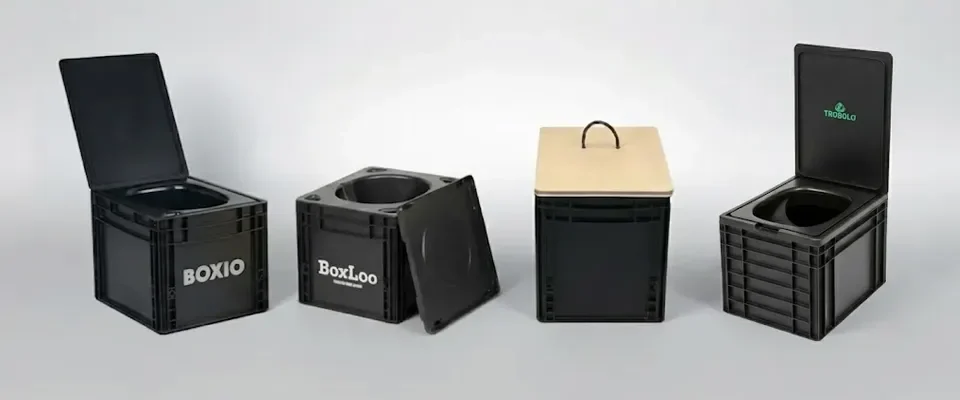
If you are looking for a practical, mobile Eurobox toilet, you now have plenty of options to choose from. We want to make your decision easier and have tested four models: the TROBOLO BilaBox, the Lokus Flatus, the Kildwick BoxLoo and the Boxio. In this comparison, we look at the most important key specifications and share our personal experiences with you. Here is a brief overview of the most important specifications.
Material and workmanship
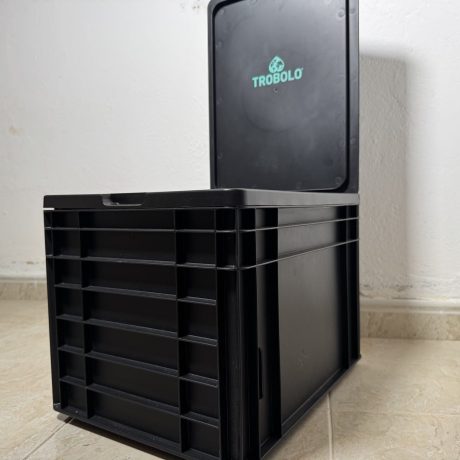
The TROBOLO BilaBox is made from robust, weather-resistant polypropylene (PP). The material is particularly durable, weather-resistant and made from 100% recyclable plastic. The urine-diverting insert is made from the same material, is cleverly designed and ensures safe and easy handling.
The Lokus Flatus also uses PP for the toilet body itself. The lid, on the other hand, is made from birch plywood. Unfortunately, it is supplied untreated, so we recommend applying an additional protective coating, such as linseed oil or wood stain. The workmanship itself feels solid, both for the lid and the body. However, the urine-diverting insert is made from ABS, a type of plastic produced from fossil raw materials that can be problematic to recycle. We therefore deduct a small point here in terms of sustainability.
The Kildwick BoxLoo uses the same materials as the Lokus Flatus, so our assessment is very similar. Overall, the materials are sturdy, feel high-quality and are weather-resistant. However, we are still somewhat concerned about the sustainability of the ABS material used for the urine-diverting insert.
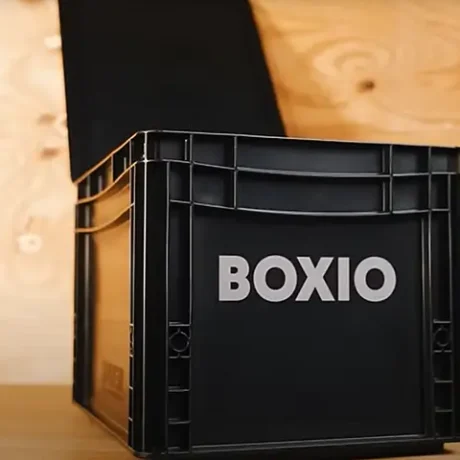
Like the other composting toilets, the Boxio body is made from polypropylene. This means it can withstand rain and is easy to clean. However, we see the ABS urine-diverting insert as an equal minor drawback from an environmental perspective.
Assembly and handling
All four composting toilets are very easy to assemble and require very little time. The Eurobox toilets are delivered almost fully ready for use. Depending on the model, only a few minor steps are required:
With the TROBOLO BilaBox, assembly is essentially limited to inserting the containers for liquids and solids. The solids container is then fitted with an inlay, the urine-diverting insert is placed in position, and that's it. Everything clicks securely into place, and thanks to its low weight, the toilet is easy to transport and can be set up flexibly.
The Lokus Flatus is also quick to assemble, although it requires a little more manual work than the other models. Before first use, a cord needs to be attached to the lid as a handle, and four support elements need to be secured underneath the urine-diverting insert. While this is not particularly difficult, it can be a little fiddly. The cord also does not seem ideal in practice: if it is not tightened enough, there is a risk that it could tear when carrying the toilet, causing the box to tip over or slip out of your hand. We also find the DIY option of integrating a fill-level indicator for the urine container by drilling a hole into the body interesting but questionable. While the idea is intriguing, we do not think it makes sense to add additional holes to the plastic. These could allow odors to escape or make it easier for pests to get inside the body.
The Kildwick BoxLoo is similarly quick to get ready for use. The plug-in connections are stable and reliable. The securely fitting lid is particularly positive, especially for mobile use. It reliably prevents anything from shifting or opening unintentionally during transport. The only drawback is that removing the lid can sometimes be somewhat difficult if it has been pushed too far into place.
The Boxio is also ready to use in no time. However, the lid with its fastening cords requires a little more care during the initial assembly and installation. The cords need to be attached correctly to ensure that the lid can be opened and closed reliably. Apart from that, assembly is easy and requires no tools.
Comfort and convenience
The TROBOLO BilaBox particularly impresses us with its low weight of just 2.9 kg (6.4 lb), which makes it very easy to transport. With a seat height of around 29 cm (11.4 in), it is perfectly adequate for short periods of use, but naturally not particularly comfortable for longer sessions. The lid is especially practical: it can simply be clipped onto the back so that it stays out of the way while remaining within easy reach. We were also impressed by the fill-level indicator, which allows you to easily check from the outside how full the urine container is. TROBOLO itself does not offer a raised seat for the toilet, but any standard small Eurobox can be used for this purpose.
The Lokus Flatus has a higher seat height of around 32 cm (12.6 in) in our test, which makes it somewhat more comfortable for longer periods of use. The included wooden lid is attached magnetically, but has to be placed somewhere separately once removed, as there is no integrated storage option. This is quite impractical, but the lid feels high-quality and also allows the composting toilet to be used as a stool. At 3.6 kg (7.9 lb), the Flatus is heavier than the very lightweight BilaBox and Boxio, but remains within the typical weight range for conventional Eurobox toilets.
The Kildwick BoxLoo has a seat height similar to that of the BilaBox. The lid has to be removed completely and unfortunately cannot be stored on the toilet itself. However, the secure locking system is a positive feature as it holds the lid firmly in place. Though sometimes it can be somewhat difficult to remove the lid if it has been pushed too far into position. At 3.5 kg (7.7 lb), the BoxLoo is also one of the heavier models in our comparison, but still falls within an acceptable weight range for a Eurobox toilet.
At 2.8 kg (6.2 lb), the Boxio is on par with the TROBOLO BilaBox. Its seat height of around 28 cm (11.0 in) is in line with the standard for this type of toilet. However, this model scores particularly well thanks to its own TOILET UP! seat raiser. The additional height provides significantly greater seating comfort. The lid is attached to the toilet body with cords and opens like a traditional toilet. However, attaching it is somewhat cumbersome and requires a bit of trial and error. We are also not entirely sure how well the cords will hold up under different weather conditions over time.
Odor development
The TROBOLO BilaBox impressed us the most in this area. This is partly due to its own litter made from sawdust and wood shavings, which covers solids very effectively and binds any liquids that develop. The wood shavings give off a natural scent that is pleasantly aromatic thanks to the essential oils they contain. TROBOLO also uses the SafeShell system for the urine container, which seals the tank reliably. This system prevents odors from escaping and ensures that no liquid can leak out, even when the toilet is moved or transported. In practice, we found that no other method of protecting the urine container against odors and leaks was more effective.
The Lokus Flatus performed solidly in our test when it came to odor development. Trelino uses only a membrane seal for the urine container that works intermittently, along with a plug for the urine outlet on the urine-diverting insert. While this plug temporarily prevents odors, it has to be removed and reattached every time the toilet is used. In practice, we found this cumbersome and not particularly hygienic. Trelino offers several types of litter: a 20-liter (5.3 gal) mixture of biochar, fibers, compost and rock flour for €32.90, a 7-liter (1.8 gal) bag of softwood fibers for €14.90 and coconut bricks in a six-pack for €19.00. Based on our test, we recommend the softwood fibers, as they are a sustainable by-product of wood processing, are easy to handle and reliably prevent odors, even though they bind moisture somewhat less effectively than some competing products.
The Kildwick BoxLoo comes with the Spillguard Kit, consisting of a lid with an integrated silicone seal and a Spillguard Plug. The kit reliably seals the connection between the urine-diverting insert and the urine container, offering two advantages: it reliably prevents overflow and slows down oxidation, the main cause of potential odors. This system worked well for us in practice. However, the downside is that the plug has to be removed and replaced regularly during use. Kildwick uses ecological litter made from Chinese silver grass. It binds liquids and solids reasonably well, but in our tests it did not match the efficiency of other types of litter, as it is less effective at binding moisture.
The Boxio also uses a simple plug, similar to the systems used by Trelino. It has to be removed every time the toilet is used and reattached afterwards. In everyday use, this quickly becomes cumbersome and, based on our experience, is not a particularly hygienic solution, as the bottom side of the plug can become dirty after transport or movement. The litter used is made from hemp, which does not bind liquids as effectively as wood shavings. Our test therefore showed that odors become noticeable quicker than with the BilaBox, for example.
Price-performance ratio
At €139.00, the TROBOLO BilaBox offers very good value for money. Its low weight, the well-considered choice of recyclable plastic for the urine-diverting insert and effective odor control through sustainable litter and the proven SafeShell system make it an environmentally friendly and practical choice for use on the go.
The Lokus Flatus costs €179.00. We consider the fact that it can also be used as a seat thanks to its wooden lid. The greater seating comfort and solid workmanship are noticeable, but in our opinion, the ABS urine-diverting insert and the complicated handling of the lid do not justify the significantly higher price. We also deduct a small point for the additional height of the Lokus Flatus Eurobox toilet. With the wooden lid, it stands at a rather high 33.5 cm (13.2 in), and when it comes to many vans, every millimeter can make a difference.
The Kildwick BoxLoo is also available for €139.00. The workmanship is solid, and while the lid cannot be stored on the toilet, it impresses with its secure click-lock system. All in all, the price is fair, although it is somewhat undermined by the poorly designed system for preventing urine odors.
The Boxio is priced at €159.90. The option of adding the TOILET UP! seat raiser is a plus, but it has to be purchased separately. In our opinion, the handling of the lid and the somewhat less effective odor control provided by the hemp litter and plug do not fully justify the higher price. Nevertheless, it is a solid and popular Eurobox toilet.
At a glance
| Spec | TROBOLO BilaBox | Kildwick BoxLoo | Boxio | Lokus Flatus |
|---|---|---|---|---|
| Manufacturer | TROBOLO | Kildwick | BOXIO | Trelino |
| Dimensions (H × W × D) | 303 × 300 × 400 mm (11.9 × 11.8 × 15.7 in) | 280 × 300 × 400 mm (11.0 × 11.8 × 15.7 in) | 280 × 300 × 400 mm (11.0 × 11.8 × 15.7 in) | 335 × 300 × 400 mm (13.2 × 11.8 × 15.7 in) |
| Seat height | 291 mm (11.5 in) | 280 mm (11.0 in) | 280 mm (11.0 in) | 325 mm (12.8 in) |
| Liquid capacity | 4.6 L (1.2 gal) | not listed | 5 L (1.3 gal) | 5 L (1.3 gal) |
| Solids capacity | 6.2 L (1.6 gal) | not listed | 5 L (1.3 gal) | 7 L (1.8 gal) |
| Uses per fill (small / large) | 10 to 20 / 8 to 10 | 8 to 10 / 4 to 6 | 8 to 10 / 8 to 10 | 9 to 11 / 6 to 10 |
| Tested load capacity | 150 kg (330.7 lb) | 150 kg (330.7 lb) | 150 kg (330.7 lb) | 150 kg (330.7 lb) |
| Weight | 2.9 kg (6.4 lb) | 3.5 kg (7.7 lb) | 2.8 kg (6.2 lb) | 3.6 kg (7.9 lb) |
| Price | €139.00 | €139.00 | €159.90 | €179.00 |
Our verdict
In our test, all four Eurobox toilets were fairly close overall, but they differed in several important details. The TROBOLO BilaBox performed best, achieving an overall score of 1.6. It stands out primarily for its very low weight and the SafeShell system, which offers the best odor protection of the four models. Its quick assembly and high solids capacity are also clear advantages. We found the external urine level indicator particularly practical, as it allowed us to easily check the fill level of the urine container while keeping our hands clean. We only deducted a small point for comfort, as there is no seat raiser for a more comfortable sitting experience. However, this is not a major issue for a mobile toilet.
Just behind the BilaBox is the Kildwick BoxLoo, with an overall score of 1.7. We were particularly impressed by its well-designed lid with click-lock system, which can be securely closed and therefore provides a reassuring feeling during transport. Another advantage is that the BoxLoo is one of the more affordable models. Its drawbacks are the limited liquid capacity and the plug system for preventing splashing and odors.
In third place is the Boxio, with an overall score of 2.0. It is also one of the lighter models and offers solid capacities of 5.7 liters (1.5 gal) for solids and 5 liters (1.3 gal) for liquids. However, it falls somewhat behind due to its higher price and the less effective solution for preventing urine odors.
In fourth place is the Lokus Flatus, which we rated with an overall score of 2.4. While it offers a slightly higher seating position and comes with a large 7-liter (1.8 gal) solids container, it is also the most expensive and heaviest solution in our test.