Blog
The ultimate camping toilet test
We tested chemical toilets, bucket toilets and composting toilets. Find out which camping toilets performed particularly well in our test.
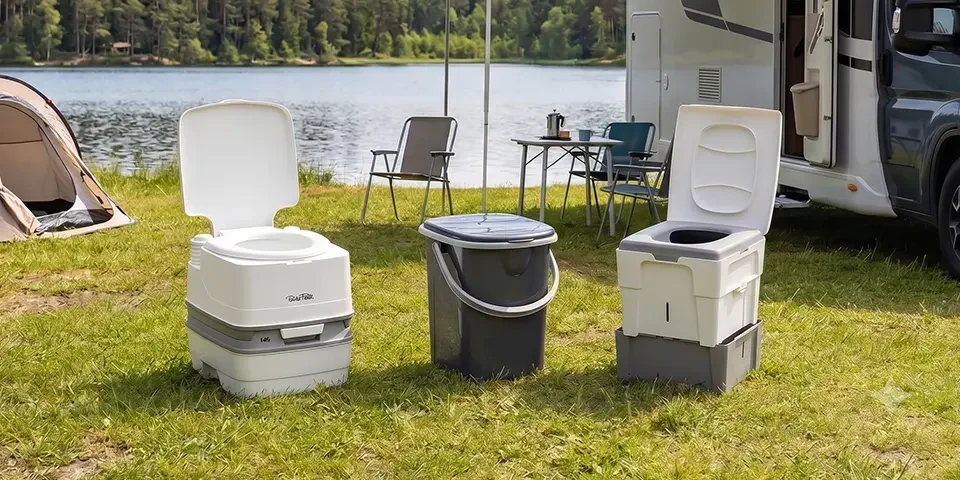
For many people, camping means freedom, independence and traveling as self-sufficiently as possible. In this context, the question of which type of camping toilet to choose also arises. With chemical toilets, bucket toilets and composting toilets to choose from, campers are spoilt for choice.
In our camping toilet test, you will learn what to look for when choosing a camping toilet, which type of toilet best suits your camping style and which toilet we consider particularly well suited for camping.
What requirements should a camping toilet meet?
A good camping toilet should be practical, hygienic and easy to use. When camping, the following points are therefore particularly important:
| Requirement | What it means |
|---|---|
| Autonomy | Independence wherever you go |
| Odor-free | No unpleasant smells in the vehicle or tent |
| Easy emptying | As clean and hassle-free as possible |
| Easy to transport | Compact design and low weight |
| Environmentally friendly | Minimal impact on the environment |
| Reliable | Can be used without problems even on longer trips |
Camping toilets compared: what types are available?
The different types of camping toilets can vary considerably. The key factor is how well the system suits you, your trip and your personal preferences. The following toilet systems are particularly common as camping toilets:
Chemical toilets: widespread type of toilet with an integrated tank and chemicals for odor control, but dependent on additives and designated disposal stations.
Bucket toilets: very simple solution without any technology, but with limited comfort and no odor control.
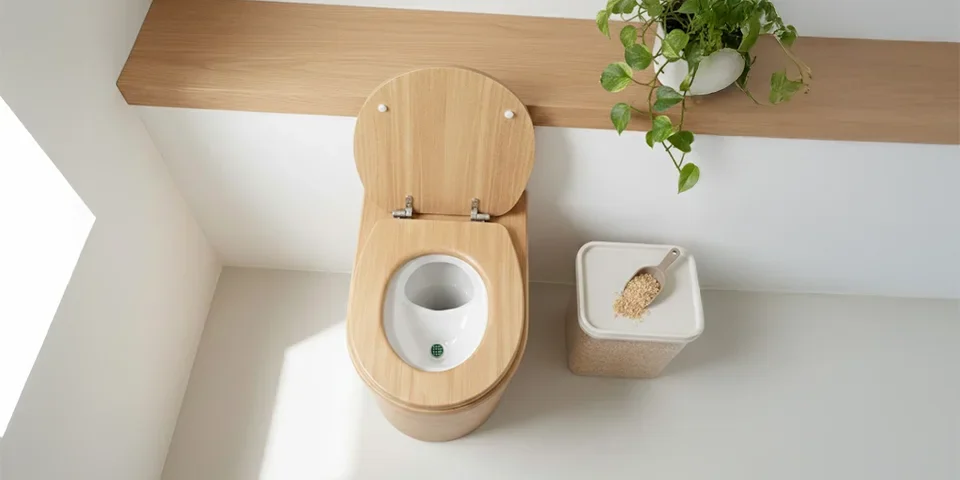
Composting toilets: modern system that separates solids and liquids, requires neither water nor chemicals and allows you to handle disposal yourself.
Where can toilet waste be disposed of?
A key difference between the various camping toilets is how toilet waste is disposed of. Chemical toilets typically depend on designated disposal stations, making them practical mainly in traditional camping environments where suitable disposal facilities are available. Bucket toilets and composting toilets, on the other hand, can be emptied independently of such stations, for example with general waste.
How convenient is it to empty the toilet?
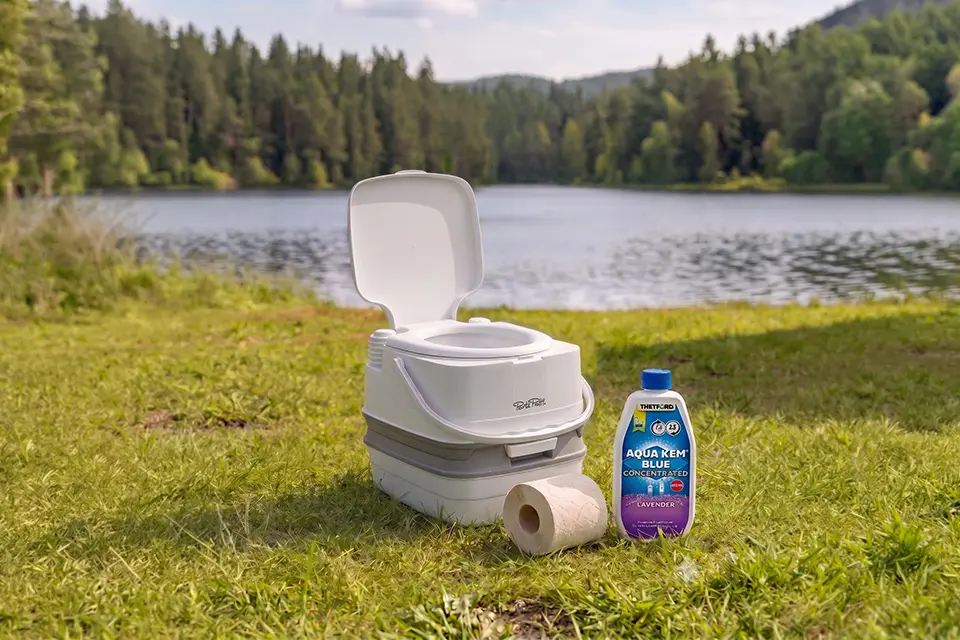
Emptying the toilet also differs noticeably between the various models. In chemical toilets, urine, feces and chemical additives are stored together in a single tank for an extended period of time. Most campers describe emptying this mixture as unpleasant. One advantage however, is that chemical toilets do not need to be emptied every day.
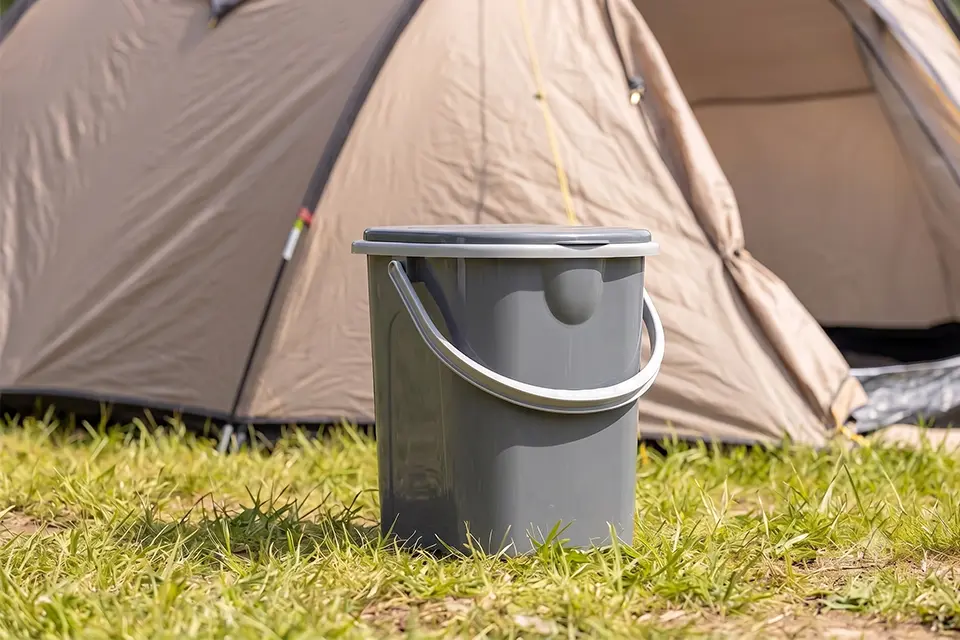
Bucket toilets also collect urine and feces in a single container, but they need to be emptied daily, ideally directly after each use, as odors can otherwise become unbearable. Since no chemicals are used and the amount of waste is smaller when the container is emptied frequently, emptying a bucket toilet is somewhat more pleasant, but it has to be done much more often.
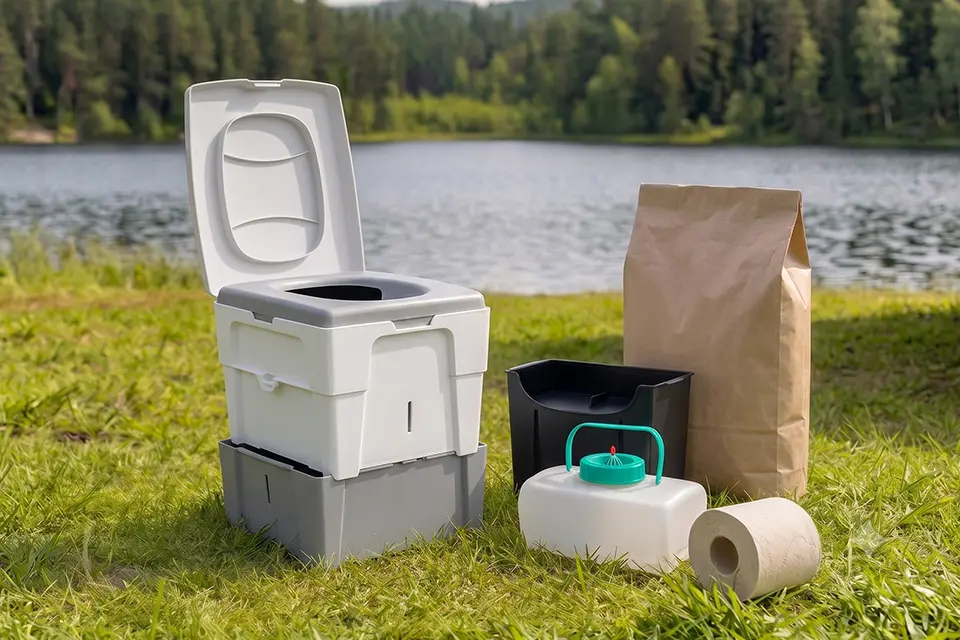
Composting toilets take a different approach: liquids and solids are collected separately. This principle allows for longer emptying intervals and makes it easy to empty the separate containers with either urine or solid waste. Composting toilets therefore offer a significantly more convenient emptying process than chemical or bucket toilets.
How comfortable is it using the toilet?
Chemical toilets can be used like regular toilets, so using them is generally comfortable. Bucket toilets are essentially simple buckets fitted with a toilet seat. They offer a rather basic experience with little comfort. Composting toilets can offer a high level of seating comfort, although these toilet models can only be used while sitting.
How much odor do the different camping toilets produce?
Another important aspect is the odor control concept of each system. Chemical toilets rely on heavy chemical additives in the tank to reduce odors during use. While these additives suppress toilet odors, the chemicals themselves produce a distinctive smell that is generally rather unpleasant.
Bucket toilets are much more dependent on how frequently they are emptied and on additional measures such as litter. Otherwise, odors can quickly reach levels that no camper would willingly put up with.
Composting toilets reduce odors by design through the separation of liquids and solids. Depending on the design, this effect can be further supported by litter or optional ventilation. Some models claim to be completely odor-free. In practice however, most manufacturers state that unpleasant odors are usually the result of incorrect use. If this happens, you will likely find a simple explanation in our guide What to do if your composting toilet smells.
How environmentally friendly is the toilet solution?
The systems also differ in terms of their environmental impact. Chemical toilets use chemical additives that need to be taken into account when disposing of the waste. This means that chemical toilets have a greater environmental impact than bucket toilets or composting toilets. Bucket toilets and composting toilets do not use chemicals, so there are no major environmental concerns as long as the waste is disposed of properly.
How reliable are the different camping toilets?
Chemical toilets work reliably as long as sufficient sanitary additives are available and a suitable disposal station can be reached regularly. If either of these is missing, using the toilet can quickly become impractical.
Bucket toilets are technically very unlikely to malfunction, but their rapid odor development and frequent emptying make them better suited as a simple emergency or occasional solution.
Composting toilets work without water or chemicals, making them particularly independent of external infrastructure. Even if no litter or power supply for optional ventilation is available, the toilet remains fully usable thanks to the separation of urine and solid waste.
What should you consider when buying a camping toilet?
Before deciding on a particular model, you should first choose the right type of toilet. Consider whether a chemical toilet, bucket toilet or composting toilet best suits your camping style. Factors such as the length of your trip, available disposal facilities, desired comfort and level of independence play a decisive role.
If you are unsure, a simple classification based on your travel style can often help:
If you mainly travel at campsites with infrastructure and want the most traditional solution possible, a chemical toilet is usually the obvious choice. For example, the popular PortaPotti could be an option.
If you are looking for a very simple, inexpensive and minimalist solution for occasional use, a bucket toilet may be sufficient.
If, on the other hand, you want to travel independently of disposal stations and value a structured solution that can be planned and used reliably over the long term, a composting toilet is often the most suitable option. A particularly popular composting toilet is the TROBOLO WandaGO, which offers unbeatable value for its money.
Once you have decided on a type of toilet and want to find the right model, you should check the following points:
| What to check | Why it matters |
|---|---|
| Seat height, size and weight | Make sure that the toilet fits in your vehicle, that the seat height is comfortable and that the model is mobile enough for camping use. |
| Container capacity | Check the size of the solids and liquid containers to ensure that emptying remains straightforward. |
| Workmanship and material quality | High-quality materials and solid workmanship ensure that the toilet is durable and robust, even with frequent use while traveling. |
| Value for money | Choose a composting toilet that fits your budget and whose features justify the price. |
| User-friendliness | The toilet should be easy to use, effectively reduce odors and be practical to handle in everyday situations. |
Depending on your personal preferences, these factors may be weighted differently.
Our test: chemical toilet, bucket toilet or composting toilet
We selected one toilet model from each category and tested the different toilet systems extensively. Our test included the Thetford Porta Potti 345 (chemical toilet), BranQ (bucket toilet) and TROBOLO WandaGO (composting toilet).
Unfortunately, the BranQ bucket toilet did not convince us at all. In our opinion, it is really only suitable as an emergency solution. It consists of a simple bucket with a toilet seat. The whole construction feels unstable, especially for larger and heavier users. The toilet lid barely stays closed, so after use it is best to weigh it down with a heavy object. The container should ideally be emptied and cleaned immediately after use.
The Porta Potti is small, easy to handle and makes a solid impression. Using it is comparable to using a regular toilet. The biggest disadvantages we identified in our test are the use of chemicals and the frustrating emptying process. Equally, the lid does not close quite as securely as we would like.
Now let's move on to the WandaGO, which is also small and particularly lightweight. The workmanship feels sturdy and, according to the manufacturer, the product can even withstand rain and snow. It is comfortable to use, although urinating while standing is not recommended. We were surprised to find that this toilet actually produces no noticeable odor at all. Emptying is also by far the easiest, as solid and liquid waste can be removed separately.
And which camping toilet is our test winner?
For us personally, the TROBOLO WandaGO is the test winner. However, there is no clear winner for everyone, as the different systems were designed for different situations. What matters less is the technology itself and more how you actually travel.
Those who stay at established campsites with infrastructure may find a chemical toilet to be a good choice.
For very simple, occasional use, even a minimalist bucket toilet may be sufficient.
If independence and flexible use are the priorities, composting toilets are an interesting option, as they work without external infrastructure and are comfortable to handle in everyday use.
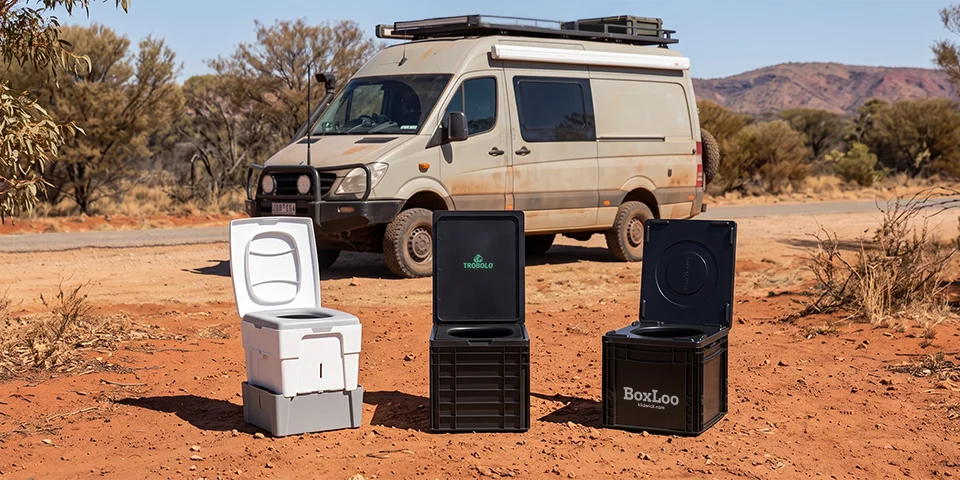
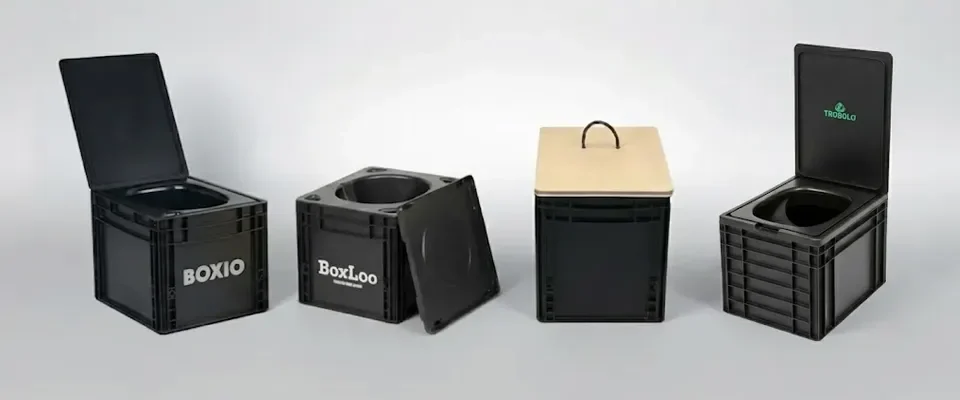
If you are looking for a wider selection of camping toilets, we also recommend our comprehensive Eurobox camping toilet comparison. Eurobox toilets are very simple camping toilets, almost as simple and lightweight as bucket toilets, while still offering the hygienic separation function of composting toilets. Definitely worth a look.