Blog
Composting toilet in a camper: advantages, disadvantages and test winners
Find out how a composting toilet works in a camper, what advantages and disadvantages it offers and which models are particularly well suited.
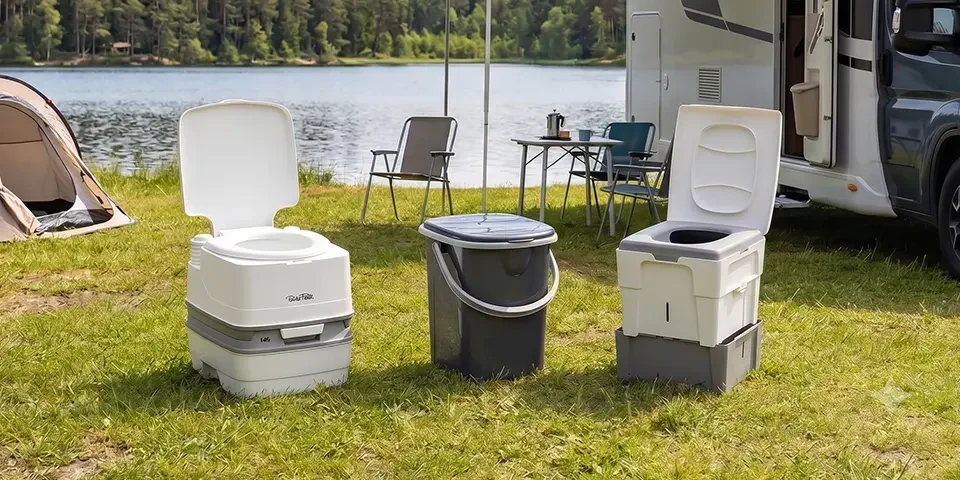
Anyone traveling in a van or camper knows the ongoing question of which toilet to choose. Which one is right, how much does it cost, how can it be stored and how easy is it to use? The range of toilet systems has become very broad, with each option offering its own advantages and disadvantages. Traditional chemical and cassette toilets are probably still among the best-known systems. However, they produce a lot of wastewater, require intensive chemical treatment and, in the case of large built-in models, always need to be emptied at designated disposal stations. This is why more and more campers are switching to alternative toilet solutions, such as composting toilets.
In this article, you will learn how a composting toilet works, what advantages it offers compared to a conventional camping toilet, what disadvantages can still arise and which composting toilets performed particularly well in our tests.
What exactly is a composting toilet?
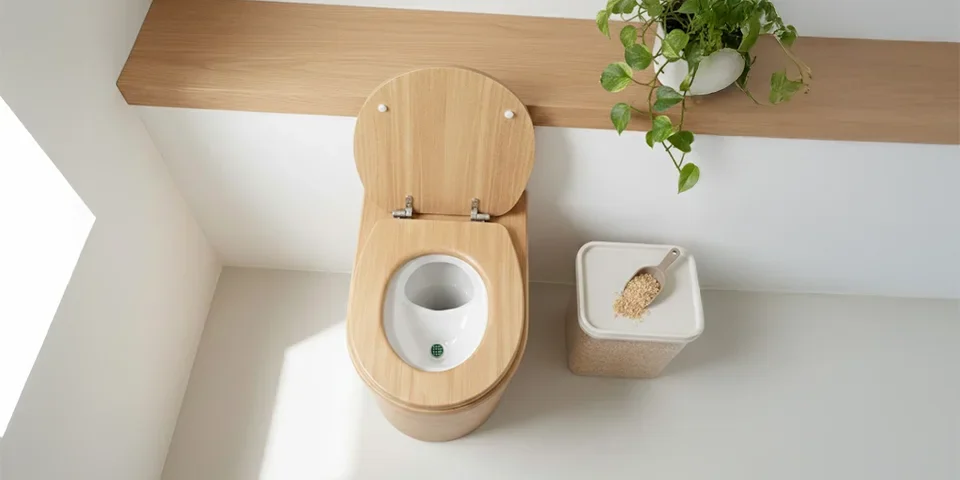
A composting toilet, also known as a dry urine-diverting toilet, separates urine and solid waste, as the name suggests, already during use. This is made possible by a special toilet insert. It ensures that urine flows into a separate tank at the front, while solid waste ends up in a separate container at the back.
This separation keeps the solid waste dry from the start, preventing unpleasant odors from developing. To further reduce odors, the use of litter is recommended. This usually consists of coconut fibres, sawdust or other natural residual materials. Depending on the toilet model, the urine container can be sealed airtight to prevent odors from escaping as much as possible. Lids, plugs or special sealing systems can be used for this purpose. This helps reduce unpleasant odors without the use of chemicals.
This is exactly what makes composting toilets so attractive for use in campers or vans. They use no water, produce virtually no odors and are also compact, making them ideal for mobile use.
Advantages of a composting toilet in a camper or van
We have summarized all the advantages of a composting toilet for your camper in this list:
| Advantage | What it means |
|---|---|
| No chemicals | You do not need any chemical sanitary fluid, which saves money and is significantly more environmentally friendly. |
| Virtually no odor | Urine and solid waste remain separate, preventing unpleasant odors from developing in the first place. |
| Easy disposal | The urine container can be emptied into any regular toilet, so you are not dependent on special supply and disposal stations for motorhomes. The bag containing the solid waste can also be disposed of with general waste. |
| Easy cleaning | A quick clean with some water and liquid cleaner is all that is needed, saving time and effort compared with a traditional cassette toilet. |
| Self-sufficient camping | A mobile composting toilet works entirely without electricity or water. This gives you much greater flexibility and lets you stay independent of official supply and disposal stations for longer. |
| No installation required | Composting toilets do not require a connection to a chemical tank or complex water pipes. Mobile models can simply be secured in place and are ready to use. |
Disadvantages and what you should keep in mind
A composting toilet does not come without compromises:
| Point to consider | What it means |
|---|---|
| Separation must be ensured | The toilet must not be used while standing and should be positioned securely so that liquids and solids can be separated without complications. |
| Regular emptying is necessary | The urine container is usually smaller than a traditional wastewater tank and therefore needs to be emptied more frequently, especially when traveling with several people on board. |
| Higher purchase costs | Composting toilets generally have higher upfront costs. Simple chemical toilets often start at around €50, while the cheapest composting toilet models start at around €139. In return, ongoing costs are significantly lower. |
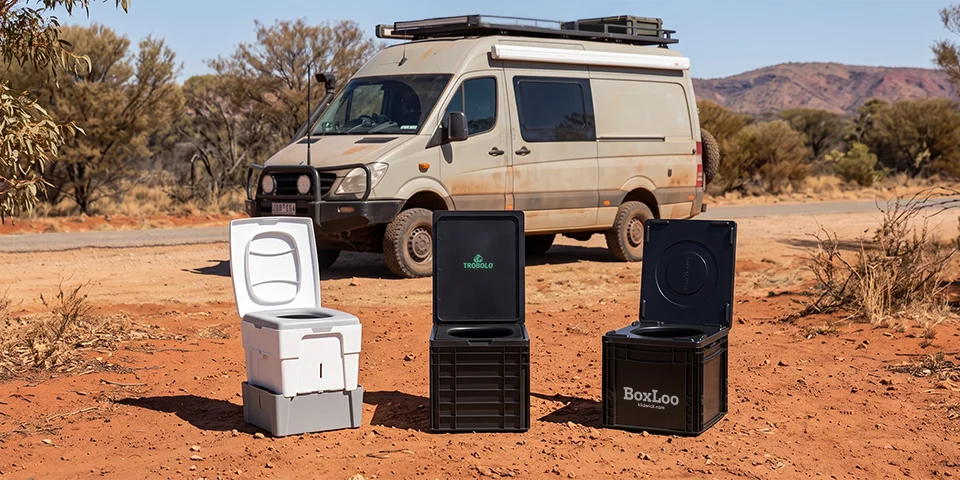
Our test winners: composting toilets for campers at a glance
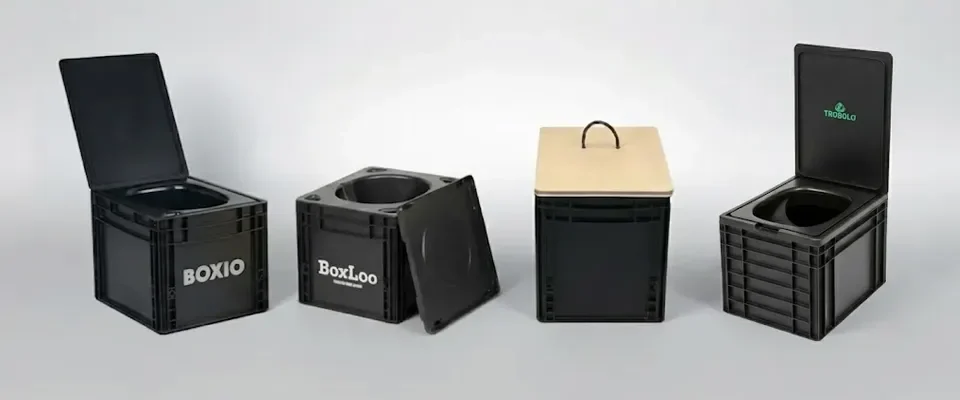
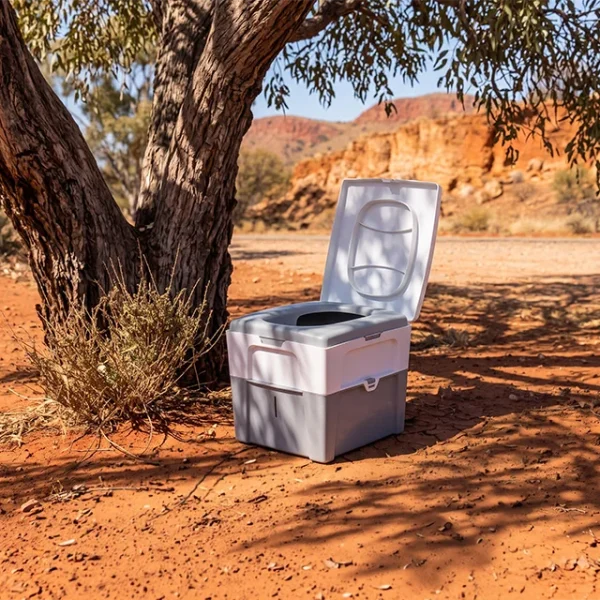
1st place: TROBOLO WandaGO
A particularly lightweight and compact composting toilet from TROBOLO with clever details that secured this model first place. These include a fill-level indicator that makes it easy to check from the outside how full the urine container already is. It also features an adjustable seat height for additional comfort. Thanks to its compact size, the toilet fits into many common camper models, for example those with a designated toilet compartment. The toilet is also equipped with TROBOLO's patented SafeShell system. The special seal on the urine container prevents odors from escaping and liquids from splashing out, even when the toilet is moved, ensuring hygienic and secure handling.
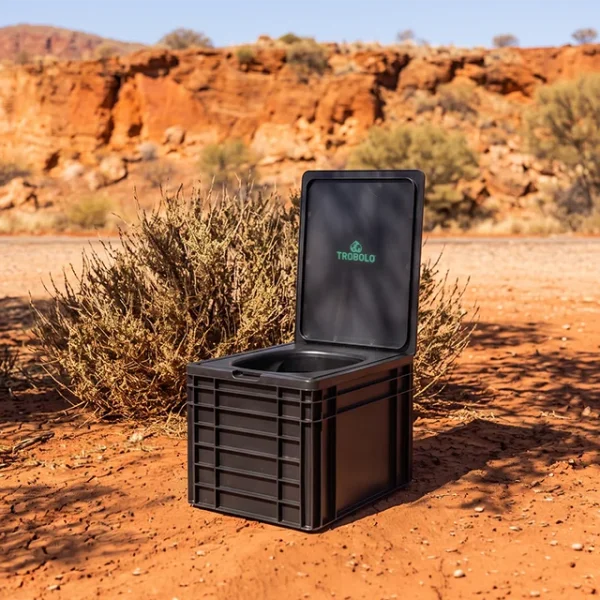
2nd place: TROBOLO BilaBox
This ultralight composting toilet from TROBOLO also impressed us in our practical test. The model comes in the practical Eurobox format, allowing it to be integrated into existing Eurobox systems in vans. The 2nd generation is now also available and is equipped with a urine fill-level indicator. This model naturally features the spill-proof SafeShell system. We only deducted a few points for comfort, which we found to be significantly higher with the WandaGO.
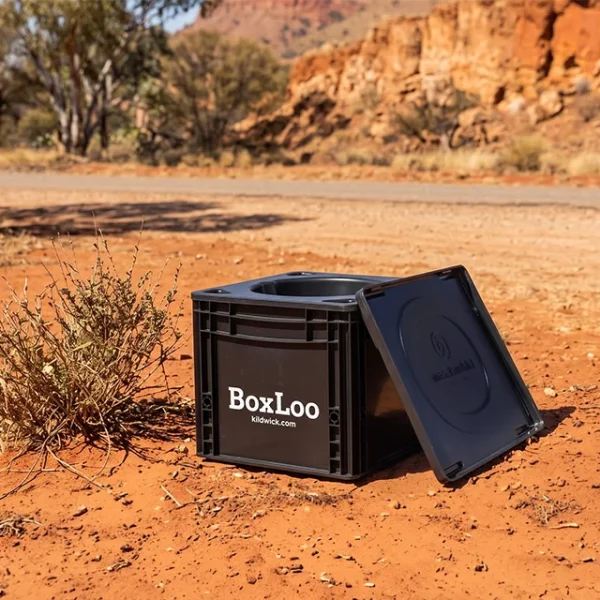
3rd place: Kildwick BoxLoo
The BoxLoo also focuses on a compact and functional design and offers a straightforward solution for independent toilet use. We particularly liked its well-thought-out construction and the natural approach that Kildwick is known for. However, compared to the WandaGO it lacks some comfort features and practical details that make everyday use even more convenient. We therefore give it a well-deserved third place.
Our verdict
A composting toilet is a genuine alternative to a conventional chemical toilet for campers and van converters: no chemical additives, no unpleasant odors and easy disposal are clear advantages.
If, for example, you want to choose a specific Eurobox model, take a look at our detailed Eurobox toilet comparison. We also took a closer look at bucket toilets, chemical toilets and composting toilets specifically for camping in our comprehensive camping toilet test.